The Route · Stop 03
Svalbard
The land of the midnight sun — the most northern water we could reach.
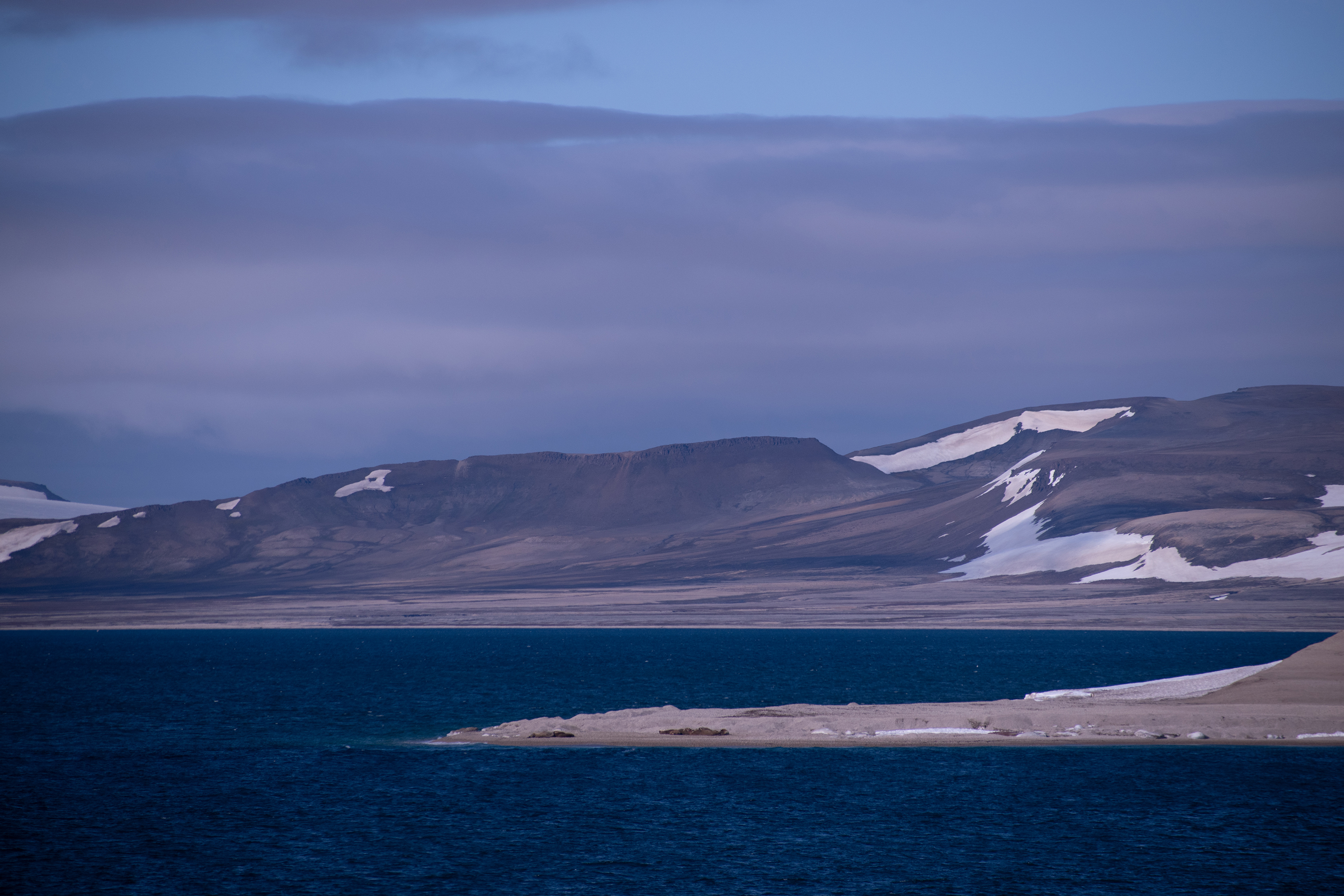
The final, and probably most interesting, location we visited was Svalbard, an archipelago another 150 miles north of Bear Island. Here, we saw polar bears, a variety of whales, seals, walruses, and plenty of birds. By this point, we were in the land of the midnight sun (where the sun is always up).

Whales off the bridge
By the time we reached the lower tip of the archipelago, loose bits of sea ice would frequently float by. Several nights, those of us on the bridge were able to catch a glimpse of feeding and surfacing whales including killer, blue, humpback, bowhead, and minke whales.

The polar bears
Additionally, we were able to spot several groups of polar bears and eventually approach them in Zodiacs. One group, a mother and two cubs, scoured an empty island for birds or bird eggs to eat. Unfortunately, by the time we were there in early July, there was no longer any ice for them to hunt for seals on.


Another time, we spotted a solo bear with a tracking collar.

The walruses
Later, we spotted some walruses (which originally looked like logs) and carefully investigated them. They sat sunning and occasionally playing on the shore of a small island. They were rather timid and would jump in the water whenever they saw anyone.


The area was frighteningly iceless.
— the captain and naturalists who had been making similar trips for yearsAs we progressed up the archipelago, we began to see more and more ice. Still, according to the captain and many of the naturalists, there should have been far more. By the time we made it to the top of the archipelago, we began to experience difficulty navigating through the thick multiyear ice. Previously, captains hadn't been able to reach as far north as we did — we were the 3rd most northern boat in the world, behind only a Russian military boat which had been stuck in ice for years and another icebreaker — even in late August when the ice had a lot more time to melt.
A Siberian driftwood outpost
After some time above the archipelago, we headed back south to a strip of land closer to the inhabited part of Svalbard. Here, on a patch of melting permafrost, we found lots of reindeer fur, some more stunted plants, lots of angry Arctic terns, and even an outpost constructed from Siberian driftwood.


Meet the animals at the heart of the study
The Animals →